BESA TR19 Explained: The Ultimate Compliance Guide for UK Chefs
The hospitality industry is highly regulated. Ignorance of the law is never an excuse. When it comes to kitchen extraction, the BESA TR19 specification is the absolute law.
Many venue operators misunderstand what TR19 actually means. They view it as a simple cleaning receipt. This is a dangerous misconception.
TR19 is a rigorous engineering standard. It dictates precise measurement protocols for grease accumulation. It defines exactly what constitutes a fire hazard.
Understanding TR19 is mandatory for protecting your business license and insurance cover.
Let us break down the core principle of TR19. It relies on objective data, not visual estimates. A duct is not clean just because it looks shiny.
Technicians use a Wet Film Thickness Gauge. They scrape the inside of your ductwork. They measure the grease depth in microns.
The TR19 standard sets strict limits. An average grease thickness of 200 microns is the absolute maximum allowed. Anything higher requires immediate remedial action.
If your grease levels hit 500 microns, your system poses an immediate, critical fire risk.
How quickly do you reach 200 microns? Faster than you think. A busy burger restaurant can exceed this limit in a few weeks.
This is why TR19 categorizes cleaning frequencies by cooking type and duration. Heavy grease producers must clean their systems frequently.
A high-volume fast-food kitchen requires professional intervention every three months. A standard gastro-pub usually needs a six-month cycle.
Never stretch your cleaning intervals to save money. You are gambling with your entire venue.
Your commercial property insurance is tied directly to this standard. Insurance underwriters calculate risk based on compliance.
Read your policy wording today. Look for the section on kitchen extraction. You will almost certainly find a specific mention of BESA TR19.
The clause states you must maintain the system to this exact standard. If you fail to do so, your fire cover is invalidated.
A voided policy means you pay for fire damages entirely out of pocket.
Consider the aftermath of a venue fire. The fire brigade extinguishes the blaze. Then, the fire investigators arrive.
They pinpoint the source. If they trace it back to the canopy, they notify your insurer. The insurer’s loss adjuster steps in.
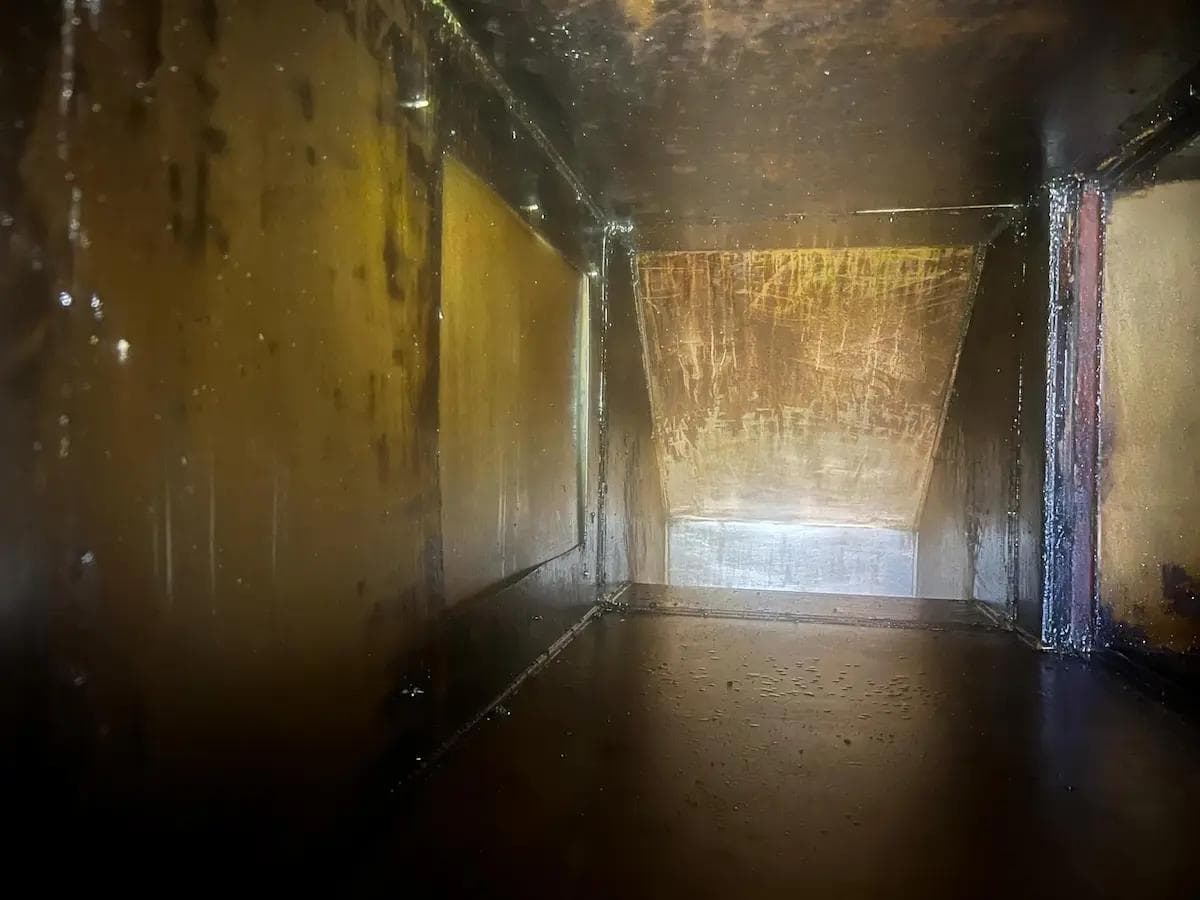
The very first document they request is your valid TR19 certificate. They also demand the post-clean photographic report.
If you cannot provide these documents instantly, the investigation stops. Your claim is denied on the spot.
Do not trust just any cleaning company. The market is full of rogue operators. They offer cheap cleans but lack proper certification.
A rogue cleaner wipes the canopy and issues a fake certificate. They do not clean the hard-to-reach ductwork. They do not take micron measurements.
You must hire a BESA-accredited contractor. Verify their credentials independently. Check their registration on the official BESA website.
A cheap clean will cost you your entire business when the system catches fire.
Access is a critical component of TR19 compliance. A contractor cannot clean what they cannot reach. Many duct systems lack proper access doors.
TR19 mandates the installation of access panels at regular intervals. They must be placed near fans, bends, and dampers.
If your ductwork is sealed solid, it cannot be certified. Your contractor must install retro-fit access doors before they clean.
Do not accept a certificate that states 'cleaned where accessible'. That phrase legally invalidates your compliance.
The responsibility stops with you. The general manager or owner is the designated 'Responsible Person' under the Regulatory Reform (Fire Safety) Order.
You cannot pass the blame to your head chef. You cannot blame a poor cleaning contractor. The law holds you personally accountable.
If a fire injures staff or customers, you face severe legal consequences. Negligence can lead to heavy fines or imprisonment.
Take extreme ownership of your extraction maintenance.
Proper kitchen extract cleaning goes beyond just the ductwork. The TR19 standard includes the extraction fan and the discharge cowl.
Grease destroys fan motors. It coats the impellers and throws them off balance. The motor burns out prematurely.
A broken fan stops your kitchen dead. You cannot serve food without extraction. Professional cleaning extends the lifespan of your mechanical equipment.
Regular maintenance prevents unexpected mechanical failures during Saturday night service.
This ties into the broader picture of venue maintenance. A well-maintained exhaust ensures good airflow. Good airflow requires clean supply ducts.
This is where professional duct cleaning uk becomes relevant. Clean supply air balances the atmospheric pressure in your kitchen.
To ensure absolute safety, monitor your environment. Routine indoor air quality testing uk detects hidden ventilation failures.
Pair your TR19 schedule with regular air quality testing uk to maintain a flawless working environment.
Key TR19 Compliance Steps:
- Read your insurance policy to confirm exact cleaning frequency requirements.
- Hire only BESA-accredited contractors for all extraction work.
- Demand a full post-clean report with micron measurements and photographs.
- Ensure your ductwork has adequate, compliant access panels installed.